
Behind the Scoop · October 9, 2026
What Happens Behind the Scenes at a Pet Waste Removal Company?
Curious how a pet waste removal business works? Here's a behind-the-scenes look at customer scheduling, route management, billing, communication, and daily operations.
By Brent Winterton
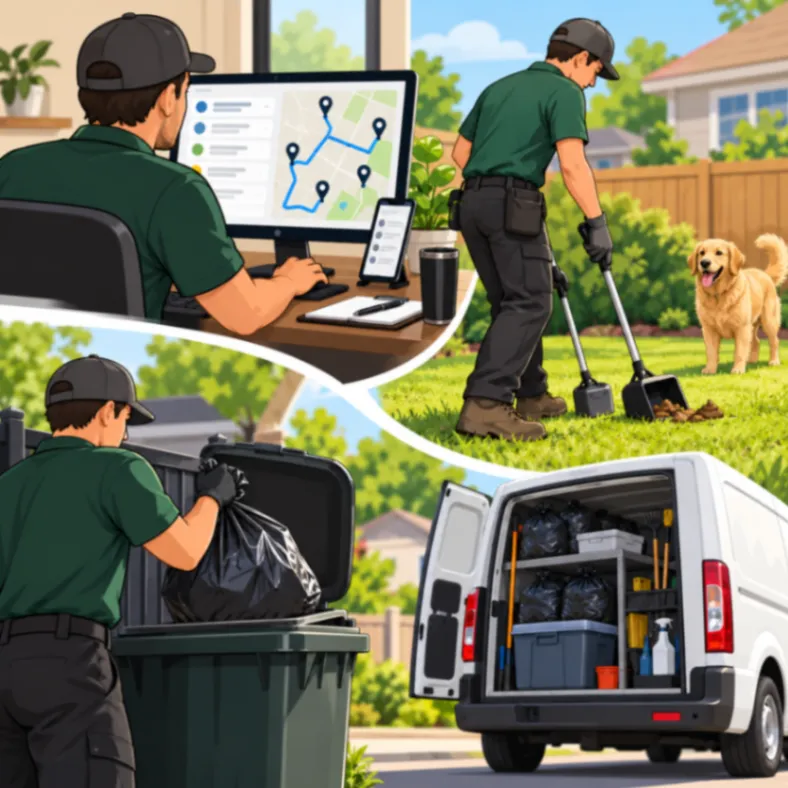
What Happens Behind the Scenes at a Pet Waste Removal Company?
One of the things I like about the pet waste removal business is that the service is incredibly easy for customers to understand. They sign up, someone comes to their house on a regular schedule, and their yard gets cleaned.
Ideally, that’s about all they ever have to think about.
But the simpler a service feels to the customer, the more important it becomes to have the right systems operating behind the scenes.
When you’re running a pet waste removal company, the actual yard cleanup is only one part of the work. There’s also scheduling, billing, customer communication, route management, and a steady stream of little issues that need attention.
None of these things is especially complicated by itself. The challenge is managing all of them consistently as the customer base grows.
Everything Begins With the Signup Process
When a new customer signs up for pet waste removal, the company needs more information than simply their name and address.
How many dogs do they have? How large is the property? How frequently do they want service? Is there a locked gate? Are there any special instructions the technician needs to know?
Those details affect pricing and scheduling, but they also help determine how the property should be serviced.
For example, a customer with a small yard and one dog might require considerably less time than someone with a large property and four dogs.
If the company doesn’t collect accurate information upfront, it can create problems later when the technician arrives and discovers that the job is different from what was expected.
This is one reason having a consistent customer signup process becomes increasingly important as a pooper scooper business grows.
Scheduling Is More Complicated Than It Looks
Recurring service sounds simple until you start trying to organize hundreds of customers across multiple neighborhoods.
The goal is generally to group customers geographically so technicians aren’t spending unnecessary time driving between properties.
That means a new customer might be assigned a particular service day based on where they live.
It also means that adding customers isn’t always as straightforward as placing them into the next available appointment.
You have to consider where the customer fits into the existing routes and whether adding the property will make the schedule more or less efficient.
As the business grows, routes may need to be reorganized. New neighborhoods become large enough to support dedicated service days, while other areas may remain too scattered to service efficiently.
Route planning is one of those parts of the business that customers rarely think about, but it has a major effect on operating costs.
Customer Communication Adds Up Quickly
A customer might contact the company because they got another dog, need to change their service frequency, or want to pause service while they’re out of town.
Someone else might have a billing question or forget to unlock their gate.
Another person might request a quote but never complete the signup process.
Individually, these are relatively simple situations. But when you have hundreds of recurring customers, there can be a steady stream of messages requiring attention.
This is where customer management systems and automation can become useful.
Software such as Sweep&Go or Jobber can help companies organize customer information, scheduling, and other operational details. Additional automation tools can handle repetitive communication, such as following up with leads who haven’t signed up or contacting former customers about restarting service.
We also work in this area through HomeFlow Suite, which provides customer follow-up and marketing automations that integrate with existing business software rather than replacing it.
Billing Is Another Ongoing Responsibility
One advantage of recurring pet waste removal is that customers can continue receiving service over an extended period.
But recurring service also means recurring billing.
The company needs to track customer subscriptions, payment methods, failed payments, service pauses, and cancellations.
When a customer adds another dog or changes their service frequency, their billing may need to be adjusted.
If a payment fails, someone needs to follow up.
And if a customer cancels, the company needs to make sure the service schedule and billing records reflect that change.
These are the kinds of administrative tasks that don’t seem particularly important when you’re starting with five customers. Once the business grows, they become much harder to manage without reliable systems.
Employees Introduce Another Layer of Complexity
A solo pooper scooper business owner has direct control over almost everything.
They know which customers are on the route, how long each property takes, and whether the work was completed properly.
Once employees begin servicing the yards, the owner has to rely on other people to deliver the same level of service.
That requires training, clear procedures, accurate customer notes, and some way to track completed work.
Technicians also need to know what to do when something goes wrong.
What happens if a gate is locked? What if a dog is outside? What if weather conditions make a property unsafe to service?
Having consistent procedures helps employees make appropriate decisions without needing to contact the owner about every situation.
Customer Retention Is Part of Operations
It’s easy to think of customer retention as a marketing issue, but a lot of it comes down to operations.
Customers sign up because they want dog poop removal to become one less thing they have to worry about.
If the service is consistently completed, communication is clear, and problems are resolved appropriately, customers have fewer reasons to reconsider their subscription.
On the other hand, missed visits, billing problems, and poor communication can create frustration even when the actual yard cleanup is being performed correctly.
For a recurring service business, keeping customers satisfied has a direct effect on long-term revenue.
The Business Gets More Complicated as It Grows
I think this is one of the most important things for someone researching how to start a pet waste removal company to understand.
The physical service doesn’t change very much as the business grows. You’re still sending someone to a property to remove dog waste.
What changes is the number of customers, technicians, schedules, payments, and communications that need to be managed.
That’s why the systems behind the business become increasingly important.
At Scooping R Us, our goal is to make the service simple for customers. They shouldn’t have to think about the scheduling and administrative work required to keep their yards clean.
And if you’re interested in building a company that provides this kind of service, Poop Scoop Academy offers resources for learning the business side of the pet waste removal industry.