
Behind the Scoop · October 9, 2026
How Professional Pooper Scoopers Handle Aggressive Dogs
How do professional pooper scoopers handle aggressive dogs? Learn about dog bite prevention, customer responsibilities, backyard hazards, and safety in pet waste removal.
By Brent Winterton
One of the things people don’t always think about when considering a pooper scooper business is that you’re entering properties where dogs live.
Most of the time, this isn’t particularly complicated. Customers know when their yards are scheduled to be cleaned, and arrangements can be made to keep dogs safely separated from technicians.
But every dog is different, and not every animal is comfortable having an unfamiliar person enter its backyard.
Some dogs are curious and friendly. Others are territorial, nervous, or protective of their property.
For someone working as a professional pooper scooper, knowing how to handle those situations is an important part of the job.
Why Dog Safety Matters in Pet Waste Removal
When people research the risks of starting a pet waste removal business, they often think about the physical work, weather, or sanitation.
Those are all legitimate considerations, but working around unfamiliar dogs deserves attention too.
A dog that behaves perfectly well around its owner may react differently when a stranger enters its yard.
And even dogs that are generally friendly can behave unpredictably if they’re frightened, startled, or protecting something.
For that reason, technicians shouldn’t be expected to interact with unfamiliar dogs simply because they’re working on a property where dogs live.
It’s much better to establish clear expectations with customers before service begins.
Keeping Dogs Secured During Service
One common approach in the pet waste removal industry is to ask customers to keep their dogs inside or otherwise safely separated from technicians during scheduled visits.
This allows the technician to enter the yard, complete the cleanup, and leave without needing to manage the animals.
It’s also helpful for the dogs, particularly those that become anxious around unfamiliar people.
The exact policy will vary depending on the company, but the underlying goal is to reduce unnecessary interactions between technicians and unfamiliar animals.
Customers should understand those expectations when they sign up rather than finding out about them after a problem occurs.
What Happens When a Dog Is Outside?
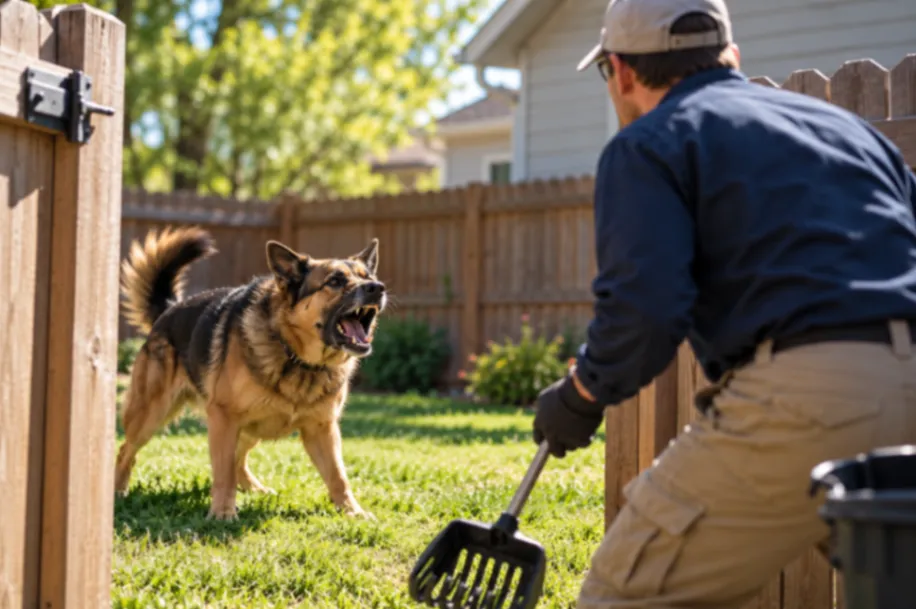
Imagine a technician arrives at a customer’s house and finds a large dog loose in the backyard.
The dog begins barking as the technician approaches the gate.
Even if the customer has previously described the dog as friendly, entering the yard may not be a good idea.
The technician shouldn’t feel obligated to determine whether the animal is actually aggressive.
A safer approach is to remain outside the property and follow the company’s procedure for contacting the customer or handling an inaccessible yard.
Sometimes the customer can secure the dog and the technician can continue the service.
Other times, the visit may need to be delayed.
For someone running a pooper scooper company, this is exactly the kind of situation that should be addressed through a clear policy rather than leaving every employee to make an improvised decision.
Recognizing Potentially Aggressive Behavior
Dogs communicate in different ways, and their behavior isn’t always easy to interpret.
Growling, snapping, lunging, or attempting to block access can indicate that approaching the animal would be unsafe.
However, the absence of those behaviors doesn’t guarantee that a dog is safe.
A technician’s job is to clean the yard, not evaluate the temperament of unfamiliar animals.
If a situation appears threatening or uncertain, avoiding the interaction is generally the safer choice.
The CDC’s dog bite prevention guidance provides additional information about reducing the risk of dog bites.
Gates Are Another Important Safety Issue
Dog safety isn’t limited to avoiding bites.
One of the responsibilities that comes with entering a customer’s backyard is making sure gates are properly secured.
If a gate is left open, a dog could escape from the property. Depending on the location, that could expose the animal to traffic or other hazards.
For that reason, checking gates should be a routine part of professional pet waste removal service.
Technicians also need to pay attention to damaged latches, broken fencing, or other access problems that could prevent a gate from closing properly.
These may seem like minor details, but they’re exactly the kinds of things that matter when you’re providing recurring service at someone else’s home.
Other Backyard Hazards
Dogs aren’t the only potential safety concern.
Professional pooper scoopers may encounter uneven ground, hidden holes, sharp objects, slippery surfaces, or obstacles that are difficult to see.
Weather can make those hazards worse.
Snow and ice can create slippery conditions, while extreme heat can make the physical work more demanding.
Tall grass and landscaping can also conceal obstacles.
Technicians need to remain aware of their surroundings rather than focusing exclusively on locating dog waste.
Appropriate footwear, safe work practices, and clear procedures for reporting hazards are all worth considering.
Safety Becomes More Important When You Hire Employees
For someone operating a one-person poop scooping business, many safety decisions happen naturally.
You encounter a situation, evaluate it, and decide whether to continue working.
But when you’re hiring technicians, those expectations need to be communicated clearly.
Employees should know when they’re permitted to enter a property, what to do when a dog is loose, and how to report unsafe conditions.
They should also understand that completing a scheduled cleanup isn’t worth risking an injury.
This is one of the operational responsibilities that comes with growing from a solo pooper scooper business into a company with employees.
What Customers Can Do to Make Service Safer
Dog owners can help make professional pet waste removal safer by following their provider’s access policies.
That includes securing dogs when required, providing accurate gate instructions, and communicating any concerns about the animals or property.
If something changes, such as getting a new dog or installing a different gate, letting the company know can help prevent confusion during future visits.
Good communication makes the experience easier for everyone involved.
Safety Is Part of Providing Professional Service
A professional pooper scooper should be efficient and thorough, but safety has to remain part of the job.
Sometimes that means delaying a service visit because a dog is loose or a property can’t be accessed safely.
That may be inconvenient, but it’s better than creating an unnecessary risk for the technician, customer, or animal.
At Scooping R Us, professional dog waste removal is about more than simply cleaning a yard. It’s also about respecting customers’ properties and approaching the work responsibly.
For anyone interested in the operational side of starting a pet waste removal business, Poop Scoop Academy provides additional education about building and managing a company in this industry.