
Behind the Scoop · October 9, 2026
How Professional Pooper Scoopers Clean Yards Efficiently
Learn how professional pooper scoopers clean yards efficiently, including equipment, cleanup techniques, difficult surfaces, and ways to reduce wasted time.
By Brent Winterton
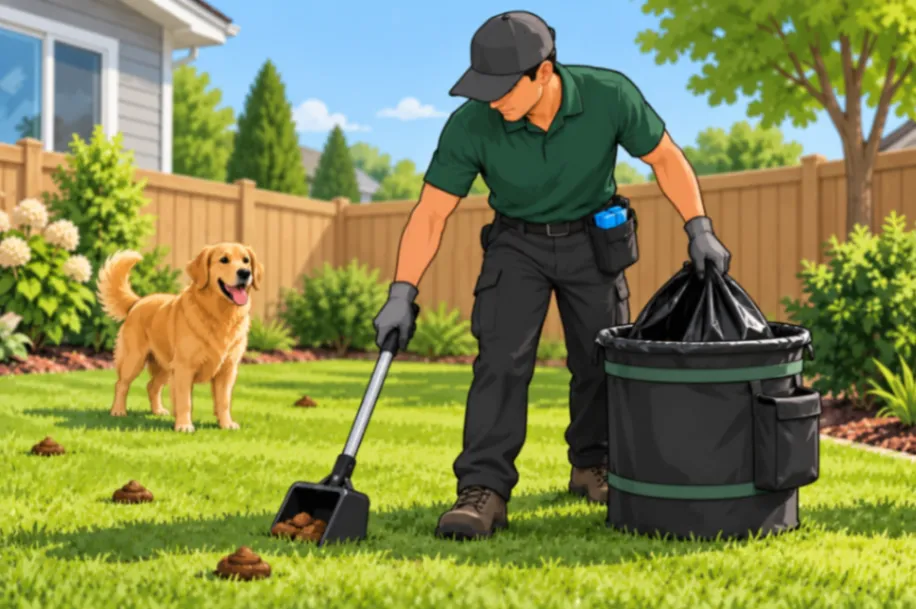
When you’re cleaning your own backyard once or twice a week, efficiency probably isn’t something you think about very much. You grab a shovel or rake, walk around until you’ve picked everything up, and move on with your day.
But when you’re cleaning dozens of yards every day, the way you approach the work starts to matter quite a bit.
One of the things I’ve noticed about the pet waste removal industry is that small improvements can make a meaningful difference when they’re repeated across hundreds or thousands of service visits.
Saving two minutes on one yard doesn’t sound particularly exciting. But if a technician completes 25 yards in a day, that’s potentially 50 minutes saved. Of course, that only matters if the time savings don’t come at the expense of doing a thorough job.
For anyone researching how to scoop dog poop professionally, there are a few things worth understanding about how the work is performed.
Choosing the Right Pooper Scooper Equipment
Most professional pooper scoopers use relatively simple equipment. You don’t need expensive machinery or complicated tools to clean a backyard.
A rake and collection pan are common choices, along with bags, gloves, and a container for transporting equipment.
However, the type of surface you’re cleaning can affect which tools work best.
Grass, gravel, decorative rocks, mulch, and artificial turf all present slightly different challenges. Equipment that works well on a maintained lawn might be frustrating to use in a yard covered with landscaping rocks.
This is something new pet waste removal business owners should think about before purchasing large quantities of equipment. It’s worth experimenting with different tools to find something that’s comfortable, durable, and effective across the types of properties you’ll be servicing.
The best equipment isn’t necessarily the most expensive. It’s whatever allows you to do the job thoroughly without wasting unnecessary time.
Having a Consistent Pattern Makes a Difference
One of the easiest ways to waste time cleaning a yard is to walk around randomly.
You spot some waste near the fence, walk over to collect it, notice something near the patio, and then end up crossing back over an area you’ve already checked.
A more systematic approach makes it easier to cover the entire property without repeatedly walking over the same ground.
Some technicians prefer working around the perimeter before moving toward the center. Others divide the yard into sections and clean each one before moving on.
The exact method isn’t as important as having a consistent process.
This becomes especially useful in larger yards or properties with complicated landscaping, where it’s easy to miss areas if you’re not paying attention.
Dogs Tend to Use Certain Areas
Anyone who has owned dogs for a while has probably noticed that many develop preferred areas of the yard.
Some consistently go near fences or landscaping. Others use particular sections of grass.
For a professional pooper scooper servicing the same property every week, learning those patterns can make the job easier.
Over time, you become familiar with where waste is most likely to be found, which can reduce unnecessary searching.
That doesn’t mean ignoring the rest of the yard. Dogs aren’t always predictable, and a professional cleanup should still include checking the entire accessible area.
But familiarity with recurring properties can make a noticeable difference in efficiency.
Initial Cleanups Are a Different Kind of Job
There’s a substantial difference between cleaning a yard that receives weekly service and cleaning one that hasn’t been maintained for several months.
A recurring customer generally has a relatively predictable amount of waste to collect. An initial cleanup may involve significantly more accumulation, especially if the property has multiple dogs.
The condition of the yard also matters. Waste that has been sitting for a long time can become difficult to spot or collect, particularly when it’s mixed with leaves, tall grass, or other debris.
This is one reason professional pet waste removal companies often price initial cleanups differently from recurring service.
For someone starting a pooper scooper business, understanding that difference is important. Otherwise, you may find yourself spending far more time on certain properties than your pricing accounts for.
Weather and Yard Conditions Can Slow Everything Down
Working outdoors means dealing with conditions that aren’t always ideal.
Snow can bury waste, making it difficult to locate. Frozen ground can make collection more challenging. Rain can soften waste, while tall grass and fallen leaves can hide it.
These aren’t necessarily problems that better equipment can completely solve.
Sometimes the work simply takes longer.
That’s why it’s important to consider weather, landscaping, and property conditions when estimating how many yards a technician can realistically clean in a day.
A route that works well during the summer may take considerably longer under difficult winter conditions.
Efficiency Isn’t Just About Scooping Faster
One of the biggest mistakes a new pooper scooper business owner can make is focusing exclusively on how quickly each yard gets cleaned.
You might spend ten minutes cleaning a property, but if it takes twenty minutes to drive to the next customer, improving your scooping speed by another minute isn’t going to make a particularly large difference.
In that situation, the bigger opportunity is improving route density.
The most efficient pet waste removal companies need to think about both the physical cleanup process and how customers are scheduled geographically.
A technician who cleans yards efficiently but spends half the day driving isn’t going to produce the same results as someone with an equally efficient cleanup process and a tightly organized route.
Thoroughness Still Matters
There’s also a point where trying to work faster can become counterproductive.
If technicians rush through properties and regularly miss waste, the company may end up dealing with complaints, return visits, and unhappy customers.
Those problems can easily eliminate whatever time was saved.
The goal should be to develop a repeatable process that allows technicians to clean yards thoroughly without unnecessary walking, searching, or backtracking.
For dog owners, many of these same principles can make cleaning their own yards easier. Keeping the grass maintained, using appropriate tools, and following a consistent pattern can reduce the time required.
Of course, if you’d rather not spend your time picking up dog poop at all, Scooping R Us offers professional pet waste removal services.
For anyone interested in learning more about the business side of professional scooping, including equipment, pricing, and building efficient routes, Poop Scoop Academy has resources specifically for people starting and growing pet waste removal companies.