
Behind the Scoop · October 9, 2026
How Many Yards Can a Pooper Scooper Clean in a Day?
How many yards can a professional pooper scooper clean in one day? Learn how yard size, driving time, dog count, and route density affect productivity.
By Brent Winterton
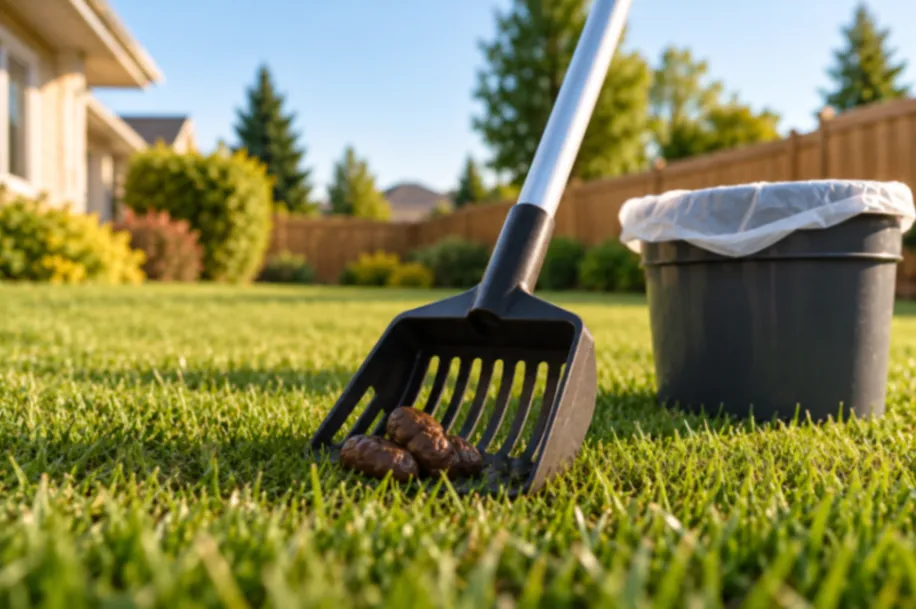
One of the questions that comes up when people start looking into the pet waste removal industry is how many yards a professional pooper scooper can realistically clean in a day.
It’s a reasonable question, especially if you’re considering starting a pooper scooper business and trying to figure out how much revenue one person could generate.
The problem is that there isn’t one answer that applies to every route.
I’ve seen how much of a difference customer location, yard size, service frequency, and weather can make. Two technicians can work the same number of hours and complete very different numbers of stops, even when both are working efficiently.
To understand why, you have to look at how the time is actually being spent.
How Long Does It Take to Clean One Yard?
The amount of time required to clean a yard depends on several factors.
A small property with one dog and regular weekly service is generally going to be quicker than a large yard with multiple dogs.
The condition of the property matters too. Short grass makes waste easier to spot, while tall grass, leaves, gravel, and landscaping can slow things down.
Then there’s the amount of accumulated waste.
A weekly customer might have a relatively predictable amount to collect, while an initial cleanup could involve weeks or months of accumulation.
For illustration, suppose a technician averages ten minutes of cleaning time per yard. That would theoretically allow six yards per hour if the technician never had to travel between properties.
But that’s obviously not how a real route works.
Driving Time Changes Everything
Let’s say the technician spends ten minutes cleaning each yard and another ten minutes traveling between customers.
Now each stop requires approximately twenty minutes, which works out to three stops per hour before accounting for breaks or other delays.
Over an eight-hour period, that would be a theoretical maximum of 24 stops.
If those same customers were located much closer together and travel time dropped to five minutes between stops, the technician could theoretically complete four stops per hour, or 32 stops in eight hours.
Those are simplified examples, not productivity benchmarks. Real routes also include parking, equipment handling, property access, breaks, and unexpected delays.
But the comparison illustrates why route density has such a large effect on the number of yards a pooper scooper can clean in a day.
Yard Size and Dog Count Matter
Not every stop is equally demanding.
A customer with one dog and a small backyard may require very little time.
Another customer with four large dogs and a substantial property could take significantly longer.
This is one reason many pet waste removal businesses consider dog count, yard size, and service frequency when determining prices.
If two customers require very different amounts of labor but pay the same amount, they may contribute very different amounts to the company’s profitability.
For someone starting a pooper scooper business, it’s important to understand how these differences affect route productivity.
Weekly Routes Are Usually More Predictable
One advantage of recurring pet waste removal is that technicians become familiar with the properties they service.
They learn where gates are located, which areas of the yard dogs tend to use, and how long individual properties typically take to clean.
Weekly service also helps prevent waste from accumulating excessively.
That doesn’t mean every visit takes exactly the same amount of time, but recurring routes can become easier to estimate as the company gathers more experience.
Initial cleanups are generally less predictable because the amount of accumulated waste can vary considerably.
Weather Can Reduce Productivity
Weather is another reason it’s difficult to establish one universal number of yards per day.
Snow can hide waste, while frozen ground can make it difficult to collect.
Heavy rain can complicate cleanup, and extreme heat can affect how quickly technicians can safely work.
Seasonal conditions may also affect how many customers are actively receiving service.
A route that works efficiently during mild weather may take longer under difficult conditions.
Why Business Owners Should Track Revenue Per Hour
For someone running a pet waste removal company, the number of yards completed isn’t the only productivity measurement worth tracking.
Revenue per route hour can be even more useful.
Suppose one technician completes 25 yards averaging $18 each.
That’s $450 in revenue.
Another technician completes 22 yards averaging $25 each.
That’s $550.
The second technician completed fewer stops but generated more revenue.
Of course, you would still need to account for labor, driving, and other expenses to determine profitability.
But it demonstrates why the highest number of yards doesn’t necessarily mean the best-performing route.
What’s a Realistic Daily Target?
Rather than copying someone else’s number, I think it’s better to measure your own routes.
Track how long individual yards take, how much time technicians spend driving, and how many stops they can complete without sacrificing service quality.
As you acquire more customers and improve route density, those numbers may change.
For a new pooper scooper business owner, the first goal should be learning how long the work actually takes in your market.
Once you have reliable data, you can make better decisions about pricing, scheduling, hiring, and how many customers a route can support.
For more information about building a pet waste removal business, Poop Scoop Academy offers resources on pricing, route management, and business growth.
And if you’d rather hire someone to clean your yard than worry about how long the job takes, Scooping R Us provides professional pet waste removal services.