
Behind the Scoop · October 9, 2026
A Day in the Life of a Professional Pooper Scooper
What does a professional pooper scooper do all day? See how routes, yard cleanups, travel, customers, and scheduling fit into a typical workday.
By Brent Winterton
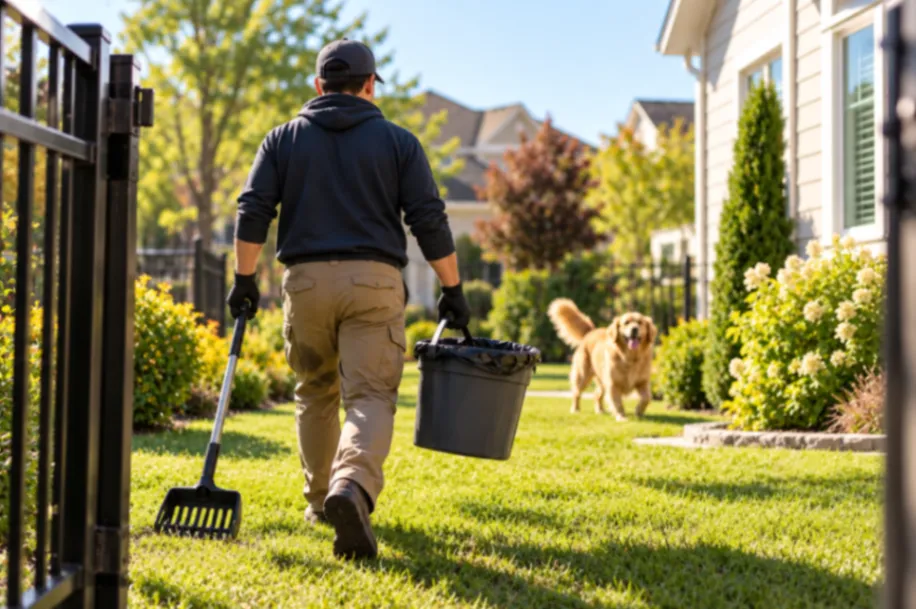
It’s probably not a job most people imagined having when they were younger.
But professional pooper scoopers are part of a real service industry built around something millions of dog owners deal with every day.
And while the job description sounds simple, a typical day involves more than walking around backyards collecting dog waste.
Here’s what a workday in a pet waste removal company can look like.
The Day Begins With the Route
Before heading to the first yard, a technician needs to know where they’re going.
That usually means reviewing a route that includes customer addresses, service notes, and any special instructions.
Some customers have dogs that need to be secured.
Others have specific gates to use.
A few may have requested changes since their previous visit.
A good route is organized so the technician isn’t driving back and forth across town unnecessarily.
That might sound like a small detail, but travel time becomes a major factor when you’re completing multiple stops every day.
The First Yard Sets the Pace
Once the technician arrives, the process is fairly straightforward.
Park safely.
Access the yard.
Check the property.
Collect the dog waste.
Make sure the gate is secured before leaving.
The time required can vary considerably.
A small yard with one dog and regular weekly service is different from a large property with several dogs and accumulated waste.
Weather, grass length, landscaping, and how recently the yard was cleaned can also affect the work.
Most of the Day Is a Repeating Cycle
Drive.
Park.
Enter the yard.
Clean.
Check the gate.
Move to the next stop.
That repetition is part of what makes the business scalable.
The service is relatively consistent, which allows companies to create repeatable procedures and train technicians.
But every property still has its own challenges.
Some yards have obstacles.
Some have difficult terrain.
Some have areas where waste is harder to spot.
And some have dogs that would prefer the technician wasn’t there at all.
The Route Doesn’t Always Go According to Plan
A customer may forget to unlock a gate.
A dog may be outside when it was supposed to be indoors.
A technician may encounter unsafe conditions.
Weather may change unexpectedly.
When those things happen, the technician needs a clear process.
That could mean contacting the customer, documenting the issue, or following the company’s policy for inaccessible properties.
This is one reason professional pet waste removal involves more than simply being willing to do the physical work.
Consistency matters.
How Many Yards Can a Pooper Scooper Clean in a Day?
This is one of the most common questions people ask when considering a pooper scooper job or business.
The answer depends on the route.
Consider two hypothetical technicians.
One has twenty customers scattered across a wide area.
The other has twenty customers concentrated in a handful of neighborhoods.
Even if the yards take the same amount of time to clean, the second technician may finish substantially faster because less time is spent driving.
Yard size, dog count, service frequency, weather, and property access also matter.
That’s why a universal number of yards per day isn’t particularly useful without knowing the circumstances.
What Makes Someone Good at the Job?
Physical speed helps, but it isn’t everything.
A good technician needs to be thorough, dependable, and comfortable working independently.
They also need to pay attention to details.
Closing gates properly is important.
Following customer instructions is important.
Being consistent from one visit to the next is important.
A technician who rushes through yards but creates customer complaints isn’t necessarily more productive than someone who works carefully.
The Job Can Be Physically Demanding
Professional scooping involves walking, bending, carrying equipment, and working outdoors.
During the summer, heat can make the work more difficult.
During winter, snow and frozen ground can slow things down.
Anyone considering working as a pooper scooper should understand that it’s an active outdoor job.
For some people, that’s a benefit.
For others, it may be a reason to consider something different.
What Happens After the Route?
Depending on the company, the end of the day may involve cleaning equipment, documenting issues, checking service records, or preparing for the next route.
Customer communication and scheduling continue even after the physical work is finished.
And for someone running their own poop scooping business, the end of the route often means the beginning of the administrative work.
There may still be quotes to send, leads to contact, payments to review, and marketing to manage.
Is Being a Pooper Scooper a Good Job?
It can be a good fit for someone who likes independent outdoor work and doesn’t mind the obvious nature of the service.
For aspiring entrepreneurs, it also provides a useful look at the operational side of a recurring home-service business.
But whether you’re working for a company or considering starting one, the same lesson applies.
The job is about more than picking up dog poop. It’s about providing reliable service, one yard at a time.
To learn more about the business side of the industry, visit Poop Scoop Academy.
To learn about professional service for your own yard, visit Scooping R Us.